Confirm fit
Review skin type, recent sun exposure, medications, pigment risk, treatment area, device choice, and downtime tolerance.
Skin and laser
Laser hair removal uses light energy to reduce selected unwanted hair over a planned series; candidacy, device settings, preparation, risks, maintenance, and realistic limits depend on hair, skin, area, and history.
May fit
 Hair reduction
Before you book
Use these points to prepare for a focused consultation.
Review skin type, recent sun exposure, medications, pigment risk, treatment area, device choice, and downtime tolerance.
Plan around sun exposure and events. Ask what skincare or medications to pause before treatment.
Aftercare should cover sun protection, heat exposure, skincare timing, expected redness, and when a follow-up is needed.
Treatment guides
2 guides to explore. Open an image to enlarge it, download a copy, or read its details below.
Skin and laser
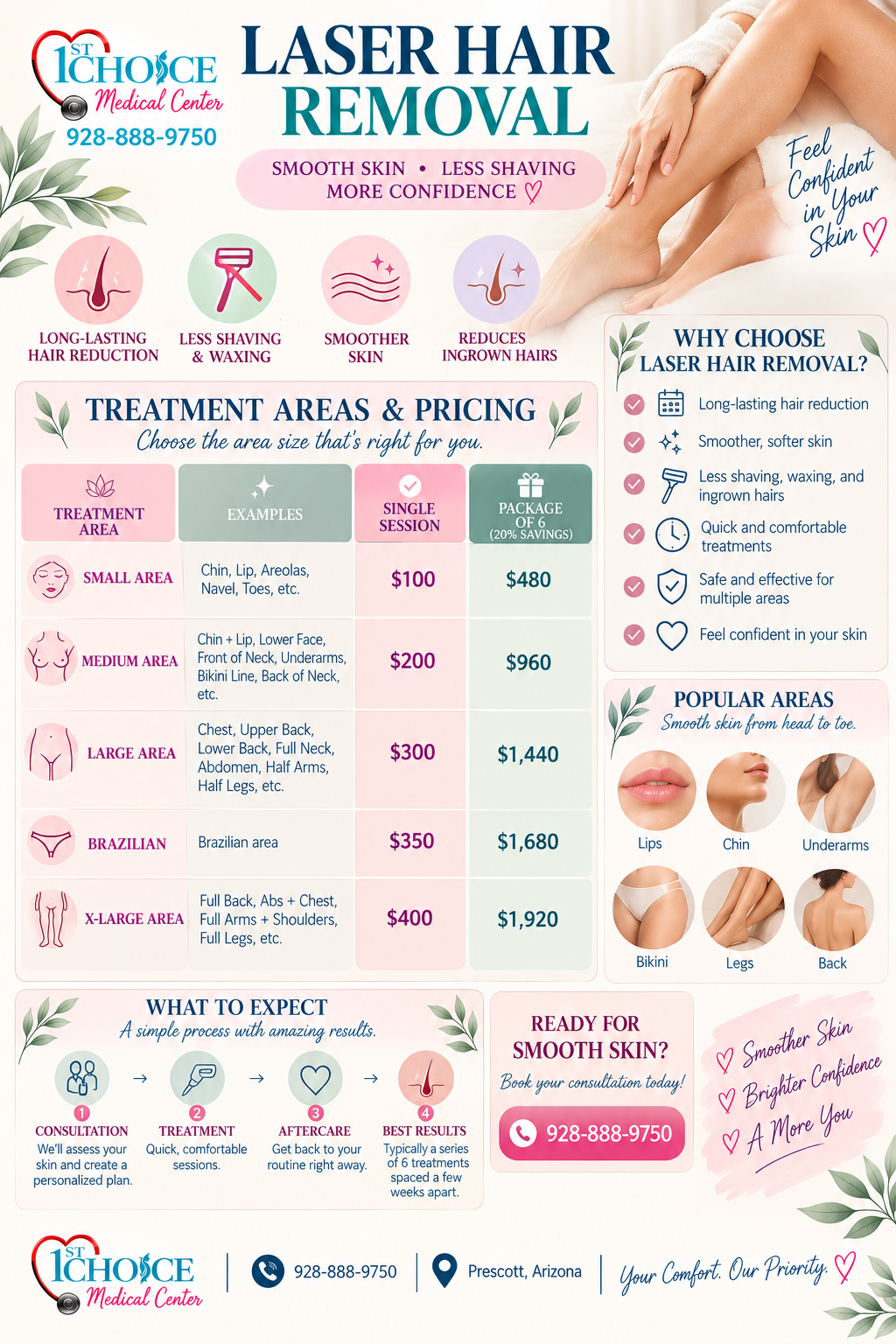
Compare treatment-area sizes and the clinic’s session and package prices, then discuss your skin, hair and treatment plan at consultation.
The clinic handout describes laser hair removal for longer-lasting hair reduction, less shaving and waxing, smoother skin, and fewer ingrown hairs. It shows lips, chin, underarms, bikini, legs and back as examples.
The poster lists single sessions and six-session packages with a 20% package saving. The office confirms current prices and the areas included before treatment.
The guide starts with a consultation to assess your skin and create an individual plan. It describes office treatments followed by aftercare, with a typical series of six visits spaced several weeks apart. Your provider determines your treatment interval and whether maintenance is needed.
Suitability and results vary with skin, hair and device. Redness, swelling and discomfort can occur. Burns, scarring or pigment changes are possible. Follow the clinician’s sun-protection and aftercare instructions even when returning to routine activities.
First Choice Medical Center, Prescott, Arizona. The number on this guide is 928-888-9750.
Skin and laser
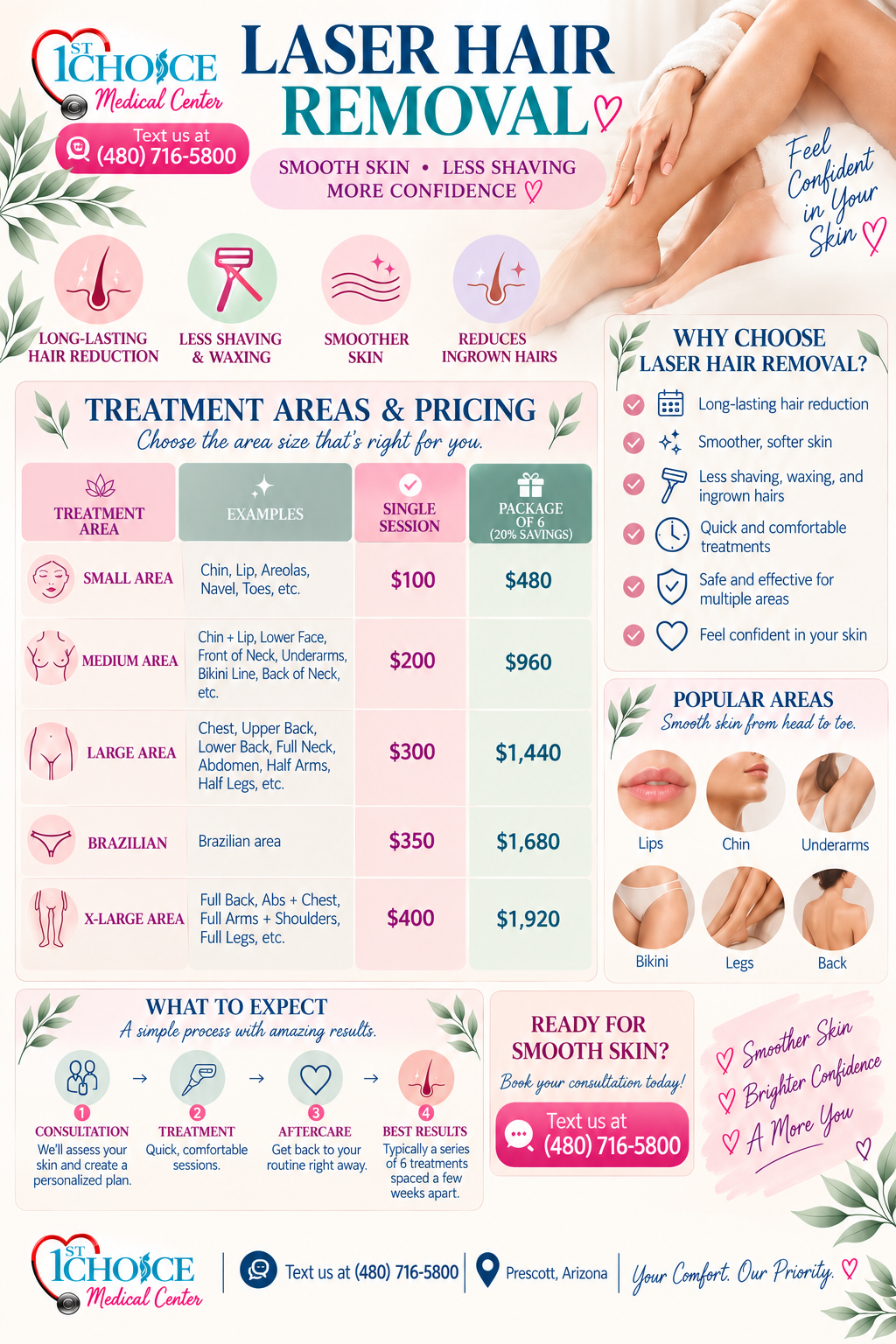
Compare treatment-area sizes and the clinic’s session and package prices, then discuss your skin, hair and treatment plan at consultation.
The clinic handout describes laser hair removal for longer-lasting hair reduction, less shaving and waxing, smoother skin, and fewer ingrown hairs. It shows lips, chin, underarms, bikini, legs and back as examples.
The poster lists single sessions and six-session packages with a 20% package saving. The office confirms current prices and the areas included before treatment.
The guide starts with a consultation to assess your skin and create an individual plan. It describes office treatments followed by aftercare, with a typical series of six visits spaced several weeks apart. Your provider determines your treatment interval and whether maintenance is needed.
Suitability and results vary with skin, hair and device. Redness, swelling and discomfort can occur. Burns, scarring or pigment changes are possible. Follow the clinician’s sun-protection and aftercare instructions even when returning to routine activities.
First Choice Medical Center, Prescott, Arizona. The handout lists text messaging at (480) 716-5800.
These guides support consultation planning. Treatment suitability, risks, recovery, and results vary by person.
Browse all treatment guidesVisit flow
Consultation first, then treatment planning if the service fits.
Pricing
Use these prices for planning only. The office confirms the current quote after reviewing fit, treatment area or program, product or equipment when relevant, dose or session sequence, and current pricing.
Planning details
A service page can help you prepare, but it cannot decide the treatment plan. The useful next step is a focused consultation that compares your goals, health history, timing, and alternatives.
Ask whether Laser hair removal matches the concern, skin type, treatment area, and goal or whether another skin or laser option should be reviewed first. Device choice and settings should follow assessment rather than a service name alone.
Bring up upcoming events, travel, outdoor plans, recent sun exposure, medications, and prior treatments. Prescott patients often plan around work, hiking, golf, lake days, and seasonal sun exposure, so timing can matter as much as the service name.
Before scheduling, ask how pricing is calculated, what follow-up may be needed, what changes should prompt a call, and how progress is reviewed. A clear plan should include realistic expectations instead of a specific outcome prediction.
Independent patient references
These independent references support the general planning topics above. They do not replace an individual medical assessment or describe an office-specific treatment protocol.
American Academy of Dermatology
Patient guidance on preparation, treatment series, maintenance, sun protection, variable response, and possible side effects.
Read the sourceU.S. Food and Drug Administration
General FDA information about cosmetic laser uses, incomplete response, pain, infection, scarring, and skin-color changes.
Read the sourceRelated patient guides
Read guides tied to this treatment for focused questions and consultation planning.
Related treatments
These services are often considered for similar goals. A consultation helps decide which option fits first.
Laser skin treatments, delivered with platforms such as the Alma Harmony® XL PRO, may be discussed for tone, texture, visible sun damage, redness, and related skin concerns.
View treatmentBody contouring consultations, which may use platforms such as Accent Prime®, review selected areas where shape or skin-support goals are part of the plan.
View treatmentCoolPeel® CO2 is a resurfacing option, delivered with the Tetra CO2 laser, that may be discussed for texture, pores, fine lines, and selected sun-damage concerns.
View treatmentCommon questions
Answers are for treatment planning, not diagnosis or specific outcome prediction. The final recommendation should come from consultation.
It is better described as long-term hair reduction. A series can reduce the amount and coarseness of treated hair, but complete or permanent clearance is not guaranteed. Hormonal changes, dormant follicles, area, and individual response can affect regrowth and maintenance needs.
Multiple sessions are usually planned because only some hairs are in a responsive growth stage at one time. The number and spacing depend on the body area, hair and skin characteristics, device plan, prior response, and interruptions in the series.
Follow the clinic's timing for shaving and avoid waxing, threading, tweezing, or other methods that remove the hair root before treatment. Report recent tanning or self-tanner, photosensitizing products or medicines, skin irritation, cold-sore history, scarring, and prior laser reactions. Do not stop prescribed medicine without instructions from the prescribing clinician.
Hair pigment helps the laser target the follicle, so gray, white, very light blond, or some red hair may respond less predictably. A range of skin tones may be assessed, but device choice, settings, and pigment-change risk require individualized planning. Consultation is needed before predicting fit.
Temporary warmth, redness, tenderness, or swelling around follicles can occur. Burns, blisters, infection, scarring, and lighter or darker skin changes are possible risks. Follow cooling, skincare, heat, friction, exercise, and sun-protection instructions, and contact the office for worsening pain, blistering, drainage, or unexpected pigment change.
A sudden or unexplained change in hair growth, especially with other new symptoms, may deserve medical evaluation before a cosmetic series. Laser can reduce selected hair but does not identify or treat an underlying cause.
Area size, number of areas, hair density, session count, package structure, and later maintenance can change total cost. Ask what one session includes, whether packages expire, how missed sessions are handled, and whether maintenance is priced separately.
Laser hair removal may be discussed when your goals match the service, your health history supports treatment, and the expected timing feels realistic. The consultation reviews your concerns, medications, prior procedures, skin or body factors, and alternatives before any plan is recommended. Candidacy is individual, and some patients may need another service or a medical evaluation first.
The visit starts with goals, history, and treatment-area review. You can discuss fit, risks, expected visit flow, aftercare, and whether a series or staged plan makes sense. For Prescott patients comparing options, consultation is also the right time to ask about timing around sun exposure, events, travel, medications, and follow-up needs.
Pricing depends on treatment-area size, number of areas, hair density, expected session count, and whether later maintenance is recommended. The consultation should distinguish per-session and package terms. Final cost can change based on area, dose, device settings, product choice, labs, medication needs, or session count. You should receive the exact quote before treatment so the planned visit, timing, and total expected cost are clear before moving forward.
Visit time: Depends on area size. Goal: Long-term hair reduction, not guaranteed clearance. Series: Multiple sessions are usually needed because hair grows in cycles. These details are planning guides, not outcome predictions. Your visit length, downtime, number of sessions, and follow-up schedule depend on the selected plan and how your body or skin responds.
Patients often compare Laser hair removal with related aesthetic options before booking. The appropriate sequence depends on the concern, anatomy, skin type, timing, budget, and tolerance for downtime. The consultation can review whether to start with one service, stage treatment, or avoid combining services too closely together.